 English
Blog


2025-12-04 17:30:10
Seat Belt webbing is no longer used solely in automobiles.In many industrial sectors—such as construction,logistics,mining,heavy equipment,aviation,offshore platforms,and fall-protection systems—high-tensile-strength webbing plays a crucial role in safeguarding workers and operators.Choosing the right industrial webbing requires more than just checking the catalog specifications.The selection process must involve a detailed understanding of seat belt tensile strength,performance requirements,environmental exposure,and certification standards that apply to each industry.
Industrial environments often impose far harsher conditions than automotive applications.Webbing may be exposed to heavy loads,vibration,moisture,oil,chemicals,or continuous abrasion against metal surfaces.This means the tensile strength of seat belts used in industrial settings must exceed the minimum required by automotive regulations.While passenger seat belts typically need around 22 kN,industrial safety belts often require 30–45 kN,depending on usage intensity and regulatory guidelines.
Before selecting a webbing product,buyers should analyze the specific working conditions.For example,in construction and fall-arrest equipment,the seat belt webbing must endure shock loads during a fall event,which places sudden tension on the material.In this case,tensile strength is not the only factor—energy absorption behavior is equally important.A suitable webbing must demonstrate high initial tensile capacity while maintaining controlled elongation to reduce impact force on the body.Conducting a professional seat belt strength test helps evaluate these parameters.
Material choice plays a decisive role in achieving high tensile strength.Industrial seat belt webbing is generally made from polyester,nylon,or high-tenacity blended fibers.Polyester is widely preferred for its excellent UV resistance,low water absorption,and consistent strength retention in outdoor conditions.Nylon offers higher elasticity,making it suitable for applications where shock absorption is required.Some advanced industrial applications,such as aerospace or offshore platforms,may use high-performance fibers like aramid or UHMWPE to achieve extreme tensile strength levels while minimizing weight.
When choosing high-tensile webbing for industrial use,the weaving structure must also be considered.Tight,uniform weaving ensures even load distribution,preventing weak points that could reduce overall performance.The webbing thickness,yarn denier,and finishing process also influence the final seat belt tensile strength.Buyers should request full technical data sheets and confirm that the product has passed relevant strength and durability tests.
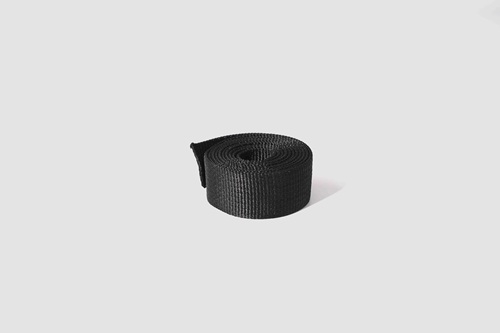
Environmental durability is another crucial factor.Industrial operations expose webbing to conditions that accelerate degradation.UV radiation can weaken fibers over time,chemicals can break down polymer chains,and constant abrasion can cause surface wear.For this reason,many suppliers offer additional protection such as UV-stabilized dyes,abrasion-resistant coatings,flame-retardant treatments,or water-repellent finishes.These treatments ensure that the webbing retains its tensile performance even after long-term exposure to harsh environments.
Quality control is essential when sourcing industrial seat belt webbing.A reputable manufacturer should provide consistent batch quality,traceable raw materials,and complete testing documentation.Tensile strength data should be obtained through standardized seat belt strength test procedures using calibrated equipment.Buyers should also evaluate stitching strength,especially if the webbing is part of a complete harness or restraint system,as poor stitching can compromise the overall tensile capacity even if the webbing itself is strong.
Certifications play a major role in industrial applications.Depending on the region and industry,compliance may be required with standards such as ANSI,OSHA,EN 361,EN 1492,or other safety guidelines.Choosing certified high-tensile webbing not only ensures safety but also reduces liability for manufacturers and distributors.Buyers should request certificates,inspection reports,and verification for the specific tensile strength ratings they require.
Finally,cost should be evaluated in relation to total lifecycle performance.Industrial buyers often focus on durability rather than initial price.A webbing with superior tensile strength,better abrasion resistance,and enhanced UV stability may reduce replacement frequency and maintenance costs.Over the long term,selecting high-quality webbing provides better value,improves operational safety,and minimizes downtime caused by equipment failure.
In conclusion,choosing high-tensile-strength seat belt webbing for industrial applications requires a detailed understanding of environmental conditions,regulatory standards,and mechanical performance indicators.By analyzing the tensile strength of seat belts,testing results,material options,and durability requirements,buyers can select webbing that delivers maximum safety and long-term reliability.The focus should always be on proven seat belt tensile strength,verified through professional seat belt strength tests and backed by consistent manufacturing quality.

Dongguan City Wanxinlong Technology Co., Ltd. Is a trusted provider of semi-finished accessories and personal protective equipment (PPE).

Business wechat
Copyright © 2026 Dongguan City Wanxinlong Technology Co., Ltd. All rights reserved.


