 English
Blog


2026-01-06 14:42:49
The performance of Military Hard Shell Knee Pads depends heavily on the materials used in their construction.Unlike consumer-grade Protective Gear,military knee protection must meet strict requirements for durability,impact resistance,comfort,and reliability.Each component of Tactical Knee Pads is carefully selected to perform under extreme physical and environmental stress.
Understanding the materials used in Military Hard Shell Knee Pads helps buyers,suppliers,and tactical professionals evaluate product quality and suitability for demanding applications.
Hard Shell Materials for Impact Resistance
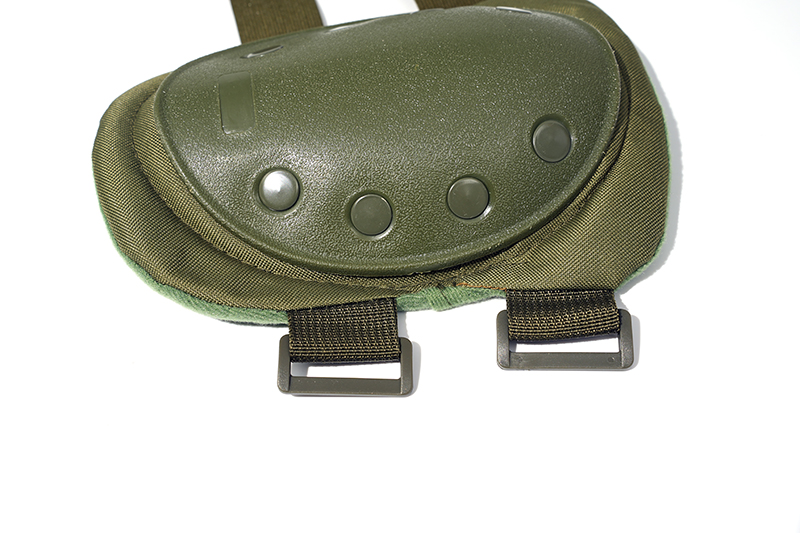
The defining feature of military hard shell knee pads is the rigid outer shell.This component is responsible for absorbing and dispersing impact forces when the knee contacts hard or uneven surfaces.Most military hard shell knee pads use high-strength polymers such as ABS plastic,polypropylene,or reinforced thermoplastics.
These materials are chosen for their excellent balance between hardness and weight.They are strong enough to resist cracking under impact while remaining lightweight enough to avoid restricting movement.Advanced polymer shells also offer abrasion resistance,ensuring long service life even in rough environments.
In some high-end tactical knee pads,composite materials may be used to further enhance strength and durability.These shells are designed to maintain structural integrity under repeated impacts,making them suitable for both combat and training scenarios.
Internal Padding for Shock Absorption and Comfort
Beneath the hard shell lies the internal padding,a critical element of effective military knee protection.This layer is responsible for absorbing shock and reducing pressure on the knee joint.Common padding materials include EVA foam,polyurethane foam,and specialized impact-absorbing foams.
High-quality military hard shell knee pads often use multi-density foam structures.Softer layers provide comfort against the skin,while denser layers absorb high-impact forces.This layered approach ensures that tactical knee pads remain comfortable during long missions without compromising protection.
Padding materials are also selected for their resilience,meaning they retain their shape and protective properties even after prolonged use.This is essential for maintaining consistent military knee protection over time.
Fabrics and Cover Materials for Durability
The fabric components of military hard shell knee pads play an important role in durability and wear resistance.These fabrics typically cover the padding and form the straps or sleeves that hold the knee pads in place.Common materials include nylon,polyester,and Cordura-style fabrics.
These materials are favored for their abrasion resistance,tear strength,and ability to withstand harsh environmental conditions.In tactical environments,knee pads may be exposed to dirt,moisture,and repeated friction.Durable fabrics help ensure that the pads remain functional even after extended use.
Some tactical knee pads also incorporate water-resistant or quick-drying fabric treatments,which enhance performance in wet or muddy conditions.
Straps and Fastening Materials
Secure fit is essential for military hard shell knee pads to function properly.The straps and fastening systems are typically made from high-strength elastic,nylon webbing,or reinforced rubber materials.Hook-and-loop fasteners,such as industrial-grade Velcro,are commonly used due to their adjustability and ease of use.
These materials are selected to maintain tension without losing elasticity over time.A reliable fastening system ensures that tactical knee pads stay in position during movement,kneeling,and rapid transitions,which is critical for consistent military knee protection.
Non-Slip and Grip Components
Many military hard shell knee pads include non-slip materials on the interior or edges to prevent shifting during use.These components may be made from silicone,rubberized coatings,or textured polymer surfaces.
By improving grip against clothing or skin,these materials enhance stability and reduce the need for frequent readjustment.This is especially important during combat or tactical operations where distraction must be minimized.
Environmental and Temperature Resistance
Military operations take place in a wide range of climates,from extreme heat to cold environments.Materials used in military hard shell knee pads are selected to maintain performance across temperature variations.High-quality polymers resist brittleness in cold weather and deformation in high heat.
Foam padding materials are also engineered to retain shock absorption properties under changing environmental conditions.This ensures reliable military knee protection regardless of climate or operational setting.
Why Material Selection Matters for Military Use
The combination of hard shell polymers,impact-absorbing foams,durable fabrics,and reliable fastening materials is what sets military hard shell knee pads apart from civilian alternatives.Each material contributes to the overall effectiveness,durability,and comfort of tactical knee pads.
For military units,law enforcement agencies,and tactical gear buyers,understanding these materials helps ensure informed purchasing decisions.High-quality materials translate directly into improved protection,longer service life,and better performance in demanding environments.
In conclusion,military hard shell knee pads are constructed using advanced polymers for impact resistance,specialized foams for shock absorption,durable fabrics for longevity,and secure fastening materials for stability.Together,these materials provide dependable military knee protection and make tactical knee pads a vital component of modern military and tactical equipment systems.

Dongguan City Wanxinlong Technology Co., Ltd. Is a trusted provider of semi-finished accessories and personal protective equipment (PPE).

Business wechat
Copyright © 2026 Dongguan City Wanxinlong Technology Co., Ltd. All rights reserved.


