 English
Blog


2026-01-07 15:01:27
Cycling has evolved from a simple mode of transportation into a popular recreational and competitive sport.With this evolution,the importance of safety gear has never been greater.Among the essential protective equipment,Bicycle Knee Protectors and elbow protectors often spark debate:which one deserves more attention,and how can riders decide what to invest in?Understanding the unique roles and benefits of each type of protection is key to making informed choices.
Bicycle Knee Protectors are designed specifically to protect the knees from high-impact forces,abrasions,and overextension injuries.The knee joint is complex,bearing weight and providing mobility,which makes it highly susceptible to injury during falls,collisions,or intense cycling sessions.Quality knee protectors combine durable outer shells,such as polyethylene or carbon fiber composites,with soft inner padding to absorb shock efficiently.This combination ensures that the impact is distributed evenly,reducing the likelihood of severe injuries.For serious riders,including mountain bikers and downhill racers,knee protection is non-negotiable.
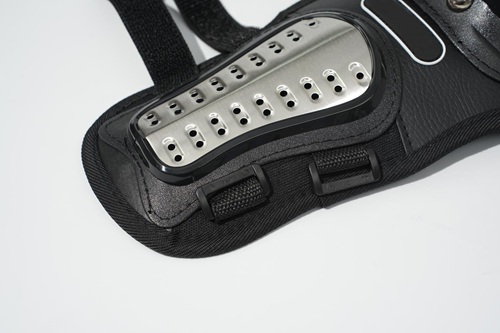
Elbow protectors serve a complementary role.The elbows,while not bearing as much weight as the knees,are vulnerable during forward falls,especially when the rider instinctively uses their hands to break a fall.Elbow Pads are typically lighter and more flexible than knee pads,allowing for greater freedom of movement,which is particularly important for BMX riders or those performing stunts.While elbow injuries are generally less severe than knee injuries,they can still lead to bruising,fractures,or chronic pain if unprotected.
When deciding between Bicycle Knee Protectors and elbow protectors,the type of cycling activity must be considered.For downhill and off-road cycling,the knees are usually the first point of contact with the ground during a crash,making knee pads more critical.Urban or casual riders might encounter more situations where elbow injuries are possible,such as slipping on wet surfaces or minor collisions with obstacles.However,even in these scenarios,protecting the knees is often a higher priority due to the potential for long-term mobility issues.
Comfort and fit are essential considerations for both types of protectors.Poorly fitting pads can restrict movement or slip during rides,compromising safety.Bicycle Knee Protectors with adjustable straps and ergonomic designs are recommended because they provide a secure fit while maintaining flexibility.Breathable materials such as mesh panels or perforated foams improve ventilation,preventing excessive sweating during long rides and enhancing overall comfort.Advanced designs also feature articulated sections that mimic natural knee movement,ensuring protection does not come at the expense of mobility.
Material choice significantly impacts protection performance.EVA foam is widely used for its lightweight and shock-absorbing qualities,while HDPE or ABS shells offer enhanced impact resistance.Premium Bicycle Knee Protectors often integrate layered materials,combining shock absorption,impact resistance,and flexibility.This layered approach is particularly beneficial for riders tackling rough terrains or engaging in extreme sports,as it maximizes protection without compromising comfort.
Durability and maintenance are also important factors when choosing Protective Gear.High-quality knee pads can withstand repeated impacts and rough handling,but regular cleaning and inspection are necessary to ensure they continue to perform effectively.Most Bicycle Knee Protectors are washable with mild soap and water,and checking straps and padding for wear ensures safety over time.Investing in durable,high-quality products may initially cost more but provides better long-term protection and comfort.
Another critical aspect is confidence.Wearing Bicycle Knee Protectors allows riders to focus on their performance without the constant fear of injury.This psychological benefit is often underestimated but can significantly improve both enjoyment and skill development.Knowing your knees are protected enables you to tackle challenging trails,perform more complex maneuvers,and enjoy longer rides with reduced risk of injury.
While both knee and elbow protectors have their place in a cyclist’s safety gear kit,prioritizing Bicycle Knee Protectors is often the smarter choice.Knee injuries can be severe and require extensive recovery,affecting not only cycling but daily activities as well.Elbow injuries,though painful,generally heal faster and with fewer long-term consequences.Therefore,for riders with limited budgets or those seeking essential protection first,high-quality knee pads should take precedence.
In conclusion,while elbow protectors are important and should not be neglected,Bicycle Knee Protectors provide more significant protection for the joints most at risk during cycling activities.Selecting the right knee pads—considering factors such as material,fit,comfort,and durability—ensures maximum safety and peace of mind.By prioritizing knee protection,riders can enjoy cycling with confidence,knowing that one of the most vulnerable and essential joints is safeguarded,allowing for safer,more enjoyable,and longer rides.

Dongguan City Wanxinlong Technology Co., Ltd. Is a trusted provider of semi-finished accessories and personal protective equipment (PPE).

Business wechat
Copyright © 2026 Dongguan City Wanxinlong Technology Co., Ltd. All rights reserved.


