 English
Blog


2026-06-05 19:15:11
A common technical question from buyers and engineers is whether nylon materials shrink or expand under environmental or mechanical conditions.
Nylon is a synthetic thermoplastic polymer that exhibits slight elasticity. Unlike rigid materials, nylon straps can stretch under tension and then return close to their original length when the load is removed.
This elastic property makes nylon webbing straps ideal for applications requiring shock absorption and dynamic load handling.
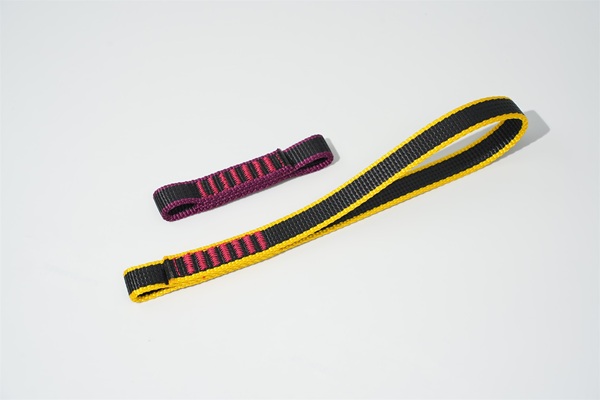
When heavy force is applied, nylon belt straps may experience temporary elongation. This behavior is known as elastic deformation. In most cases, the material recovers after the load is released.
However, under repeated heavy stress, minimal permanent elongation (creep) may occur, especially in lower-grade materials.
Temperature plays a key role in how nylon straps behave:
High temperature: increases flexibility and slight expansion
Low temperature: reduces flexibility and makes straps feel tighter
These changes are generally reversible and do not represent permanent shrinkage or expansion.
Nylon has a natural tendency to absorb small amounts of moisture from the environment. When nylon tie straps absorb water, they may temporarily become slightly more flexible.
This does not significantly affect structural integrity, but it may influence dimensional behavior in precision applications.
Under constant heavy load, nylon webbing straps may slowly elongate over time. This is known as creep, a common characteristic of polymer-based materials.
High-quality industrial-grade nylon straps are engineered with tighter weaving and heat stabilization to reduce this effect.
Compared with polyester, nylon belt straps offer better elasticity but slightly higher stretch under load. Polyester is more dimensionally stable but less shock-absorbent.
This makes nylon more suitable for applications requiring flexibility, while polyester is preferred for rigid load stability.
In real-world applications such as cargo transportation, backpack manufacturing, and safety equipment, nylon straps provide controlled elasticity that improves performance under vibration and impact.
For example, nylon tie straps used in cargo securing systems help reduce sudden shock loads during transport.
To ensure long-term stability of nylon webbing straps, users should:
Avoid excessive heat exposure
Prevent long-term overloading
Use reinforced industrial-grade straps for heavy-duty use
Store straps in dry, controlled environments

Aplexus Industrial Co.,Ltd Is a trusted provider of semi-finished accessories and personal protective equipment (PPE).

Business wechat
Copyright © 2026 Aplexus Industrial Co.,Ltd All rights reserved.


