 English
Blog


2026-07-02 18:30:50
The performance requirements of a Tree Climbing Harness vary significantly depending on the working environment. Arborists working in urban landscaping face entirely different operational challenges compared to forestry workers in remote terrain. This variation has driven the development of specialized Arborist Climbing Harness systems designed for environment-specific performance rather than universal application.
A modern Climbing Safety Harness must adapt to multiple environmental variables including altitude, humidity, temperature, and movement complexity. In dense forestry operations, workers often encounter irregular anchor points and unpredictable load shifts. A well-designed Forestry Climbing Harness compensates for these conditions through reinforced structure and enhanced load stability systems.
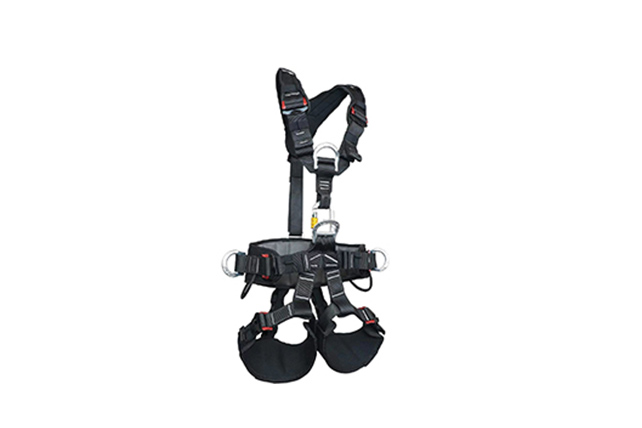
In forestry environments, a Tree Safety Harness must support prolonged suspension and heavy tool usage. Chainsaws, ropes, and auxiliary equipment increase total load stress on the harness system. As a result, forestry-grade designs prioritize durability, reinforced stitching, and high-tensile webbing materials to ensure long-term reliability under continuous field usage.
Urban tree maintenance requires a different design philosophy focused on agility and movement efficiency. A lightweight Arborist Climbing Harness allows professionals to transition quickly between branches while maintaining precise control during pruning and trimming operations. In these environments, reduced weight and improved flexibility are often more important than heavy structural reinforcement.
Industrial applications introduce additional safety complexity where a Tree Safety Harness must integrate advanced fall arrest mechanisms and multi-point anchoring systems. These environments often require compliance with strict regulatory frameworks, making certification and system redundancy essential design factors for any professional Climbing Safety Harness.
Customization in a Tree Climbing Harness involves far more than aesthetic changes. It includes structural modifications, material selection, load capacity adjustment, and ergonomic tuning. OEM and ODM manufacturing processes allow businesses to define product specifications based on target markets, environmental conditions, and user behavior patterns.
Different environments impose different stress profiles on a Forestry Climbing Harness. High-temperature regions require breathable and lightweight fabrics, while rugged forestry environments demand abrasion-resistant and reinforced materials. The ability to engineer material performance according to operational context is a key factor in modern harness development.
A professional Tree Safety Harness functions as part of an integrated safety architecture that includes ropes, connectors, and anchoring systems. Proper system integration ensures that energy distribution during load events is controlled and predictable, reducing the risk of structural failure during emergency situations.
The evolution of the Tree Climbing Harness industry is moving toward environment-driven customization rather than standardized production. Whether deployed in forestry, urban arboriculture, or industrial applications, modern Arborist Climbing Harness systems are designed to match specific operational realities, ensuring higher safety performance, improved usability, and longer service life in real working conditions.

Aplexus Industrial Co.,Ltd Is a trusted provider of semi-finished accessories and personal protective equipment (PPE).

Business wechat
Copyright © 2026 Aplexus Industrial Co.,Ltd All rights reserved.


