 English
Blog


2026-07-02 18:26:41
In professional arboriculture and forestry operations, the choice of a Tree Climbing Harness directly influences not only work efficiency but also survival-level safety outcomes. Arborists often operate at height for extended periods, sometimes in unstable canopy environments where a single equipment failure can lead to severe consequences. This is why experienced professionals carefully evaluate every Arborist Climbing Harness before field deployment rather than treating it as standard equipment.
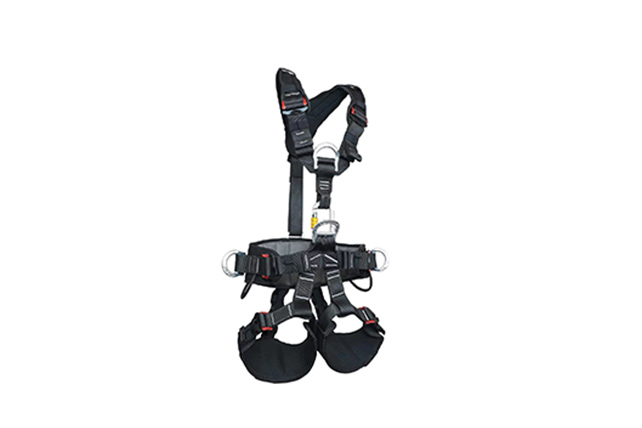
A modern Climbing Safety Harness is not an isolated product but part of a complete fall protection and positioning system. It typically works together with lanyards, connectors, and anchor points to create controlled suspension during tree work. The load is distributed through waist and leg structures, allowing arborists to maintain stability while performing cutting, pruning, or inspection tasks. A high-performance Tree Safety Harness ensures that force distribution remains balanced even under dynamic movement or sudden load shifts.
Comfort in a Tree Climbing Harness is not a luxury feature but a critical performance factor. Prolonged suspension can cause pressure fatigue, restricted blood circulation, and reduced operational accuracy. Advanced designs integrate ergonomic waist support systems, anatomical leg loop shaping, and load dispersion panels to reduce localized pressure points. In professional-grade Forestry Climbing Harness systems, comfort engineering is designed based on human body load mapping rather than generic strap adjustment.
The safety performance of a Tree Safety Harness depends heavily on its structural engineering. Reinforced webbing materials are tested under high tensile loads to ensure resistance against sudden falls. The connection points are strategically placed to minimize rotational force during suspension. In certified systems, such as those used in professional arborist operations, a Climbing Safety Harness must maintain integrity under both static and dynamic loading conditions to meet international safety expectations.
A professional Arborist Climbing Harness is exposed to constant friction against bark, tools, and environmental elements such as moisture and UV radiation. This requires the use of industrial-grade polyester or nylon fibers with reinforced stitching patterns. In forestry environments, material degradation is a key concern, making durability a major selection criterion for a Tree Climbing Harness used in long-term field operations.
Correct fitting of a Tree Climbing Harness directly affects both safety and productivity. An improperly adjusted harness can cause uneven load distribution, leading to instability during ascent or positioning. Professional arborists rely on multi-point adjustment systems that allow precise fitting across waist, leg, and shoulder regions. A properly fitted Forestry Climbing Harness ensures that the worker remains stable even during complex movements in dense canopy structures.
From a B2B procurement perspective, selecting a Tree Safety Harness involves evaluating multiple technical and commercial dimensions. Buyers consider certification compliance, material performance, production consistency, and long-term supply reliability. In many cases, the choice of a Climbing Safety Harness supplier is directly linked to operational risk management strategies within forestry and arborist service companies.
A high-quality Tree Climbing Harness is the result of integrated engineering that combines safety architecture, ergonomic design, and environmental adaptability. Whether it is an Arborist Climbing Harness, Tree Safety Harness, or Forestry Climbing Harness, the ultimate goal remains the same: ensuring maximum protection while maintaining operational efficiency in demanding working environments.

Aplexus Industrial Co.,Ltd Is a trusted provider of semi-finished accessories and personal protective equipment (PPE).

Business wechat
Copyright © 2026 Aplexus Industrial Co.,Ltd All rights reserved.


