 English
Blog


2026-11-17 00:00:00
A Full Body Harness fall arrest system protects workers from serious injury when a fall occurs during work at height. It connects the worker to a suitable anchorage through compatible components, such as a shock-absorbing lanyard or self-retracting lifeline. When a worker slips or loses balance, the system helps stop the fall, distribute the arrest forces across the body, and limit the risk of striking a lower level.
For construction contractors, industrial operators, equipment distributors, and safety equipment buyers, understanding how this system works is essential when selecting fall protection products. A reliable system is not simply a harness with a hook. Its performance depends on the correct combination of body support, connectors, energy-absorbing equipment, anchorage, fit, and inspection.
A personal fall arrest system works by connecting a worker to an approved anchorage point and controlling the forces generated during a fall. The full body harness is the component worn by the worker. It provides body support and distributes the arrest forces across areas such as the shoulders, chest, pelvis, and thighs rather than concentrating the load around the waist.
When a fall occurs, the connecting subsystem engages and slows the worker's downward movement. Depending on the application, this may involve a shock-absorbing lanyard that deploys to reduce arrest forces or a self-retracting lifeline that locks when rapid movement is detected. The harness then transfers the resulting forces through its webbing and structural components.
A typical system includes:
Full body harness: Supports the worker and distributes fall arrest forces across the body.
Connecting device: A shock-absorbing lanyard or self-retracting lifeline connects the harness to the anchorage system.
Connectors: Locking hooks, carabiners, and anchorage connectors provide secure connections between components.
Anchorage: A suitable structural attachment point that can support the forces imposed by the fall arrest system.
All components must be selected for the intended application and used within their rated limitations. Incorrect connections, unsuitable anchorage locations, or incompatible components can compromise the entire system.
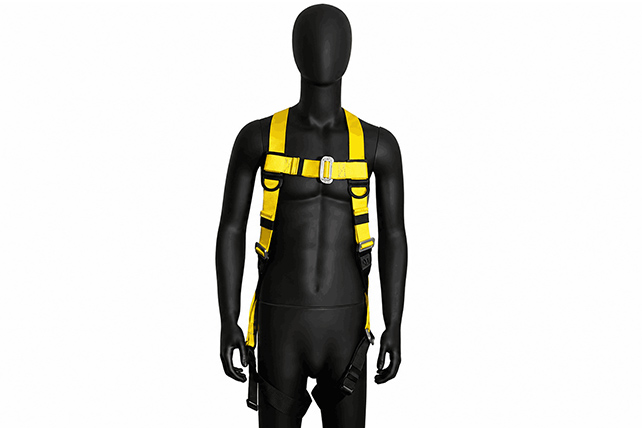
The main reason is force distribution. When a fall is stopped, the body experiences a sudden deceleration force. A waist belt concentrates pressure around the abdomen and lower back, increasing the risk of serious internal injury. A properly designed full body harness distributes the load across multiple parts of the body and helps maintain a more controlled suspended position.
OSHA identifies body Harnesses as equipment designed to minimize stress forces on workers during a fall while allowing sufficient freedom of movement for work activities. Its construction fall protection guidance also explains why body belts are not acceptable as part of a personal fall arrest system under the applicable US construction requirements.
For buyers sourcing fall protection equipment for construction, utilities, roofing, or industrial maintenance, this distinction matters. A full body harness should be selected according to the work environment, attachment method, worker size, and compatibility with the connecting equipment.
During a fall, the worker accelerates downward until the connecting subsystem engages. The energy-absorbing component helps control deceleration, while the harness distributes the resulting forces across its designed load-bearing areas.
For example, consider a construction worker using a full body harness and compatible shock-absorbing lanyard while working on an elevated steel structure. If the worker slips near an exposed edge, the lanyard engages and slows the fall. The harness supports the worker through the shoulders, chest, pelvis, and thighs, helping prevent the concentrated loading associated with a simple waist belt.
However, arresting the fall does not mean the worker is immediately safe. The worker may remain suspended and experience suspension-related medical risks. A prompt rescue plan, suitable rescue equipment, and trained personnel are therefore essential parts of a complete fall protection program.
The correct system depends on more than the harness itself. Buyers and safety managers should evaluate the working height, available anchorage, potential fall distance, clearance below the worker, and the possibility of swinging into nearby structures.
Fall clearance is particularly important. The total distance required to arrest a fall may include the lanyard's free-fall distance, deceleration distance, harness movement, connector effects, and a safety margin. If there is not enough clearance, a worker may hit the ground or a lower obstruction before the system completes the arrest.
For example, a long shock-absorbing lanyard may be unsuitable for a low-clearance maintenance platform. A properly selected self-retracting lifeline or another application-specific solution may be more appropriate, provided it meets the required performance and installation conditions.
Before purchasing, the responsible person should confirm that the system is suitable for the task and that all components are compatible. OSHA guidance emphasizes that components from different manufacturers are not automatically interchangeable. Any proposed substitution should be evaluated by a competent person before use.
For distributors, wholesalers, and industrial procurement teams, product selection should cover construction quality, compliance documentation, traceability, and supply consistency. A harness may look similar to another model but differ in webbing specifications, stitching patterns, hardware materials, adjustment range, and intended application.
Important purchasing considerations include:
Webbing quality: Check the specified material, tensile performance, abrasion resistance, and suitability for the working environment.
Stitching construction: Examine reinforcement patterns, stitching consistency, and load-bearing connection areas.
Hardware performance: Evaluate D-rings, buckles, adjustment devices, and locking connectors for strength, corrosion resistance, and reliable operation.
Fit and adjustment: Confirm available sizes, adjustment range, and compatibility with workers' clothing and other PPE.
Standards and documentation: Verify applicable market requirements, product markings, test reports, user instructions, and traceability information.
OEM and private-label capability: For bulk orders, clarify customization options, packaging, labeling, and production consistency.
A professional Full Body Harness Manufacturer should be able to explain the design specifications, testing procedures, and intended use of each model. Buyers working with a Full Body Harness Factory should also review production quality control, material inspection, stitching checks, and finished-product testing.
The performance of a full body harness begins with material selection and continues through every stage of production. Webbing must meet the specified strength and durability requirements. Poorly controlled cutting, stitching, or hardware assembly can create weak points that may not be obvious during a basic visual inspection.
During production, manufacturers should control webbing width and thickness, stitching position, reinforcement patterns, hardware installation, and product identification. Inspection should also verify that adjustment buckles operate correctly and that attachment components are assembled according to the approved design.
For example, inconsistent stitching around a D-ring attachment area may affect the harness's structural integrity. A reliable production process uses defined sewing specifications and inspection procedures to identify defects before products leave the factory.
When evaluating a Full Body Safety Harness Manufacturer or Fall Protection Harness Manufacturer, B2B buyers should request relevant test documentation and confirm that the supplied model meets the standards required in the destination market. A supplier should never rely on general product descriptions as a substitute for model-specific compliance evidence.
A dependable Fall Arrest Harness Manufacturer should provide more than competitive pricing. Buyers need clear product specifications, consistent manufacturing quality, traceable batches, and technical support for product selection. These factors are particularly important for importers and distributors supplying construction companies, industrial contractors, and safety equipment retailers.
Before placing a bulk order, request product samples, inspect the construction details, verify the applicable certifications or test reports, and clarify the manufacturer's inspection and quality assurance process. If private labeling is required, confirm that the product markings and documentation remain accurate and compliant.
A full body harness fall arrest system is designed to stop a worker's fall and distribute the resulting forces. Its effectiveness depends on correct system design, compatible components, suitable anchorage, proper fit, regular inspection, and a workable rescue plan. For B2B buyers, choosing a qualified manufacturer and verifying product performance are essential steps toward building a dependable fall protection supply chain.

Aplexus Industrial Co.,Ltd Is a trusted provider of semi-finished accessories and personal protective equipment (PPE).

Business wechat
Copyright © 2026 Aplexus Industrial Co.,Ltd All rights reserved.


