 English
Blog


2026-11-24 00:00:00
A Full Body Harness should be replaced immediately if it has arrested a fall, shows damaged webbing or stitching, contains cracked or deformed metal components, or fails an inspection. It should also be retired when its manufacturer-defined service life has expired, when required identification labels are missing or unreadable, or when its history and condition cannot be reliably verified. There is no universal replacement interval that applies to every harness. Some manufacturers specify a maximum service life, while others base retirement on inspection results and product-specific instructions. For buyers, distributors, and employers, replacement decisions should follow the manufacturer's instructions, applicable regulations, and documented inspection procedures.
A Full Body Harness is a critical component of a personal fall arrest system. Unlike ordinary workwear, it may need to perform under extreme loading conditions during a single fall event. Damage that appears minor during a visual check can affect the strength of webbing, stitching, or metal attachment components.
Consider a construction company using Harnesses across several outdoor projects. One harness may be exposed to sunlight, rain, dust, cement residue, and repeated abrasion. Another may be used indoors under relatively controlled conditions. Even if both products were purchased at the same time, their actual wear and exposure histories may be very different.
This is why replacement decisions should not be based on purchase date alone. The employer needs a record of the harness's manufacturing date, first-use date, inspection results, exposure conditions, and any fall-related incidents.
OSHA requirements and manufacturer instructions should be considered together. For example, OSHA 29 CFR 1926.502 requires personal fall arrest equipment to be inspected before each use and prohibits reuse of personal fall arrest system components that have been subjected to impact loading until determined safe by a competent person. The specific manufacturer's retirement instructions may require a more restrictive response.
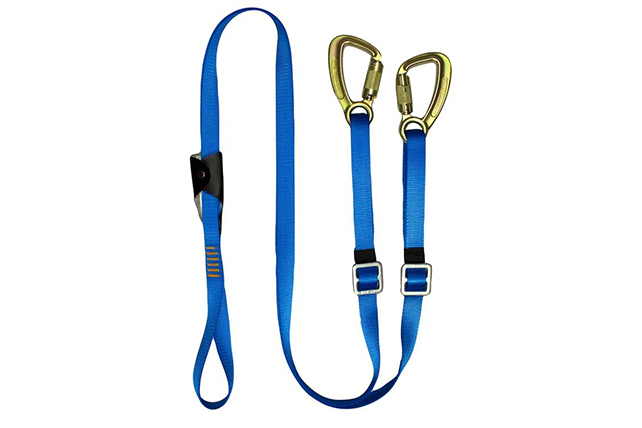
A harness that has arrested a fall should be removed from service immediately and handled according to its manufacturer's instructions. Many manufacturers require the harness to be retired after a fall arrest, even when no obvious damage can be seen.
The reason is that impact loading can place substantial stress on webbing, stitching, attachment points, and other structural components. Some models include an impact indicator that changes appearance when the harness has experienced a significant loading event. However, the absence of a deployed indicator does not automatically prove that the harness is safe for continued use.
For example, a worker may fall while connected to a self-retracting lifeline. After being supported by the harness, the equipment may look normal. Nevertheless, the harness has experienced an event that requires removal from service and assessment under the applicable instructions. It should not simply be returned to the equipment storage area for the next shift.
Employers should record the incident, identify the affected equipment, and prevent accidental reuse. Where the manufacturer requires retirement, the harness should be permanently withdrawn from service and disposed of in a way that prevents reuse.
Webbing damage is one of the most important reasons for retiring a full body harness. Workers and inspectors should examine the entire length of each strap, including areas around adjustment buckles, attachment points, and reinforced seams.
Common warning signs include:
Cuts and tears: Sharp edges, tools, and abrasive surfaces can damage load-bearing webbing.
Burns and heat damage: Welding sparks, hot equipment, and direct contact with high-temperature surfaces can weaken textile fibers.
Chemical contamination: Acids, alkalis, solvents, and other chemicals may degrade materials or cause damage that is difficult to identify visually.
Fraying and abrasion: Repeated rubbing can reduce the effective strength of webbing, especially along its edges.
Damaged stitching: Broken, loose, missing, or pulled threads around structural seams may compromise load transfer.
Deformed hardware: Cracked, bent, corroded, or otherwise damaged D-rings and buckles can affect the harness's structural integrity.
For instance, a harness used in a chemical processing facility may be exposed to cleaning agents or industrial substances. If the chemical compatibility is unknown, the equipment should not be assumed safe simply because the webbing still looks intact. The manufacturer should be consulted, and the harness should remain out of service until its suitability is established.
Similarly, a metal D-ring with visible deformation or corrosion should not be repaired or reshaped by the user. Damaged structural components require removal from service according to the manufacturer's instructions.
Inspection frequency is different from replacement frequency. A harness does not necessarily need to be replaced after a fixed number of months, but it does need to be inspected regularly throughout its service life.
A practical inspection program generally includes a user inspection before each use and a documented periodic inspection by a competent person at the interval specified by the manufacturer and applicable standards. Some manufacturer instructions specify formal inspection at least annually, but this should not be treated as a universal maximum interval. Equipment exposed to demanding conditions may require more frequent assessment.
A typical inspection should cover:
Webbing condition, including cuts, fraying, burns, stretching, and contamination.
Stitching around shoulder straps, leg straps, back straps, and attachment areas.
D-rings, buckles, adjusters, and other metal or plastic hardware.
Impact indicators, where fitted.
Product labels, serial numbers, manufacturing information, and inspection records.
Evidence of unauthorized repairs, modifications, or incompatible components.
For example, a warehouse distributing harnesses to construction contractors may establish a digital inspection register. Each harness is assigned an identification number, and its inspection history is recorded against that number. When a defect is identified, the equipment can be isolated and its replacement arranged without relying on verbal handovers.
This approach is particularly useful for companies managing large inventories across multiple project locations.
There is no single expiration period that applies to every full body harness. Service-life requirements vary by manufacturer, model, material, applicable standard, and product instructions.
Some manufacturers establish a maximum service life calculated from the manufacturing date or another specified starting point. Others state that the product may remain in service as long as it passes the required inspections and has not reached a defined retirement condition.
For this reason, buyers should not assume that every harness has a five-year or ten-year replacement rule. They should obtain the exact service-life policy for the model being purchased and confirm whether the period begins at manufacture, first use, or another point stated in the instructions.
Consider a distributor importing several batches of harnesses. If the supplier cannot provide clear manufacturing dates, product identification, and service-life instructions, the distributor may face difficulties advising end users about retirement dates and maintaining traceable inventory.
A reliable supplier should make this information available before the order is confirmed. Procurement teams should also consider stock rotation so that older inventory is not overlooked in storage.
Storage conditions can influence the long-term condition of textile and hardware components. Excessive heat, direct sunlight, moisture, chemicals, and poor ventilation may contribute to deterioration even when a harness is not being used regularly.
Harnesses should be stored in accordance with the manufacturer's instructions, generally in a clean, dry location away from direct sunlight, corrosive substances, sharp objects, and excessive heat. They should not be left in vehicles, workshops, or outdoor storage areas where environmental conditions are uncontrolled.
Working conditions also matter. A harness used in offshore maintenance, welding, heavy construction, or chemical processing may face different hazards from one used for routine indoor maintenance. Buyers should communicate these conditions to the manufacturer before selecting webbing materials, hardware finishes, and specialized configurations.
For example, a standard polyester harness may be suitable for many general industrial applications, but a high-temperature environment may require a model specifically designed and approved for that exposure. Material selection must be based on documented product suitability rather than assumptions about fiber names alone.
Replacement planning is not only an end-user responsibility. Importers, wholesalers, and safety equipment distributors also need to consider product traceability, documentation, and long-term supply consistency.
When evaluating a Full Body Harness Manufacturer, buyers should request the following information:
Service-life policy: Confirm the manufacturer's stated retirement period and how it is calculated.
Inspection instructions: Obtain the official pre-use and periodic inspection procedures.
Product identification: Check that each model has traceable labels, serial numbers, or batch identification as applicable.
Technical documentation: Request relevant conformity documents, test reports, and user instructions for the destination market.
Material specifications: Review webbing, stitching, hardware, and component details.
After-sales support: Confirm whether the supplier can provide replacement models, spare components where permitted, and technical assistance.
A professional Full Body Harness Factory should maintain consistent production controls and inspection records. It should also be able to explain how defects are identified during manufacturing and how finished products are checked before shipment.
For distributors serving different industries, a Full Body Harness Supplier should offer clear model distinctions and application guidance. Buyers sourcing specialized products may also compare a Full Body Safety Harness Manufacturer, Fall Protection Harness Manufacturer, or Fall Arrest Harness Manufacturer based on the technical requirements of their target markets.
Importantly, damaged harnesses should not be treated as ordinary repairable inventory. Unauthorized stitching, hardware replacement, or modifications can affect product performance and may invalidate the manufacturer's instructions or conformity status.
A structured replacement program helps employers avoid using equipment with unknown histories. Each harness should have a unique identification record linked to its manufacturer, model, manufacturing date, first-use date, inspection history, and retirement status.
For example, a contractor with 100 harnesses across several sites can assign each unit an asset number and maintain inspection records in a spreadsheet or equipment management system. When a harness fails inspection or is involved in a fall, its status can immediately be changed to out of service.
The company should also define who is responsible for inspections, who can authorize equipment retirement, how defective equipment is isolated, and how replacement stock is requested. Workers need to understand that a harness with questionable condition or unknown history must not be used until it has been assessed.
Where a harness is retired, it should be clearly marked and physically separated from serviceable equipment. Follow the manufacturer's disposal guidance and applicable workplace procedures to prevent accidental reuse.
A full body harness should be replaced when it has arrested a fall and the manufacturer's instructions require retirement, when it fails inspection, when structural damage is identified, or when its defined service life has ended. Missing identification information and an unknown equipment history are also reasons to withhold the harness from use until its status is established.
There is no universal replacement interval for every model. For overseas B2B buyers and distributors, the most reliable purchasing approach is to work with a manufacturer that provides clear service-life policies, traceable product information, inspection guidance, and relevant technical documentation. These details help customers manage equipment throughout its working life and make replacement decisions based on evidence rather than guesswork.

Aplexus Industrial Co.,Ltd Is a trusted provider of semi-finished accessories and personal protective equipment (PPE).

Business wechat
Copyright © 2026 Aplexus Industrial Co.,Ltd All rights reserved.


