 English
Blog


2026-11-24 00:00:00
One essential feature of a Full Body Harness is its dorsal D-ring, usually positioned on the upper back between the shoulder blades. This attachment point connects the worker to a compatible fall arrest system, such as an energy-absorbing lanyard or self-retracting lifeline. During a fall, a properly designed harness distributes the arresting forces through its shoulder straps, leg straps, and supporting webbing rather than concentrating the load on one part of the body. Other important features include adjustable straps, secure buckles, reinforced stitching, and clear identification labels. For buyers, the key is to evaluate the complete harness design, not just the presence of a D-ring.
The dorsal D-ring serves as the primary fall arrest attachment point on many conventional full body Harnesses. Its position helps keep the connection behind the worker and supports an upright body position after a fall when the harness is correctly fitted and used with a compatible system.
Its importance becomes clearer in practical working environments. Consider a construction worker installing steel structures at an elevated platform. If the worker loses balance, the connecting lanyard transfers the fall arrest load to the harness through the designated attachment point. The harness must then distribute that force through its structural webbing and supporting straps.
ANSI/ASSP Z359.11 provides requirements for full body harnesses used in personal fall arrest systems. Its guidance describes the dorsal attachment as the primary fall arrest attachment unless the application permits an alternative. It also explains how the harness should direct the load through the shoulder straps and around the thighs when supported by the dorsal attachment.
This is why the D-ring cannot be evaluated separately from the harness construction. Its strength, attachment method, supporting webbing, stitching, and compatibility with the connecting equipment all affect overall performance.
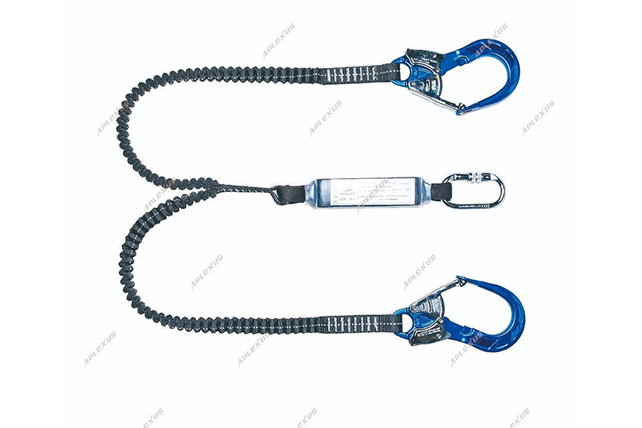
Shoulder and leg straps form the main load-bearing structure around the user's body. When a fall occurs, these straps help transfer forces away from the dorsal attachment and distribute them around the upper body and thighs.
For example, a worker wearing a harness with incorrectly adjusted leg straps may experience excessive movement during a fall. Loose straps can allow the body to shift into an unsafe position, while overly tight straps can restrict normal movement and reduce comfort during routine work.
For manufacturers, webbing selection is therefore more than a material-cost decision. Polyester Webbing is widely used because it offers a practical combination of tensile strength, abrasion resistance, and dimensional stability. Nylon may also be used in certain designs, depending on the required performance and environmental conditions.
During production, manufacturers should control webbing width, thickness, tensile properties, edge finishing, and consistency between batches. Reinforced stitching at load-bearing connections is equally important. Incorrect stitch density, skipped stitches, or inconsistent seam construction can weaken critical attachment areas.
Buckles must hold the straps securely while allowing workers to adjust and release them according to the product instructions. Depending on the model, a full body harness may use quick-connect buckles, pass-through buckles, or tongue buckles.
Procurement teams should assess whether the buckle design is suitable for the working environment. Construction workers who frequently put on and remove their equipment may prefer quick-connect systems. Workers in dusty or outdoor environments may need hardware that remains functional after exposure to dirt, moisture, and repeated handling.
Webbing should be checked for cuts, fraying, burns, chemical contamination, discoloration, and excessive wear. Stitching around the dorsal D-ring attachment and other load-bearing areas deserves particular attention.
A practical example is a harness used in a metal fabrication workshop. Sharp edges, welding sparks, and hot surfaces can damage textile components even when the harness appears structurally intact from a distance. Buyers serving this industry should discuss material suitability and application-specific limitations with the manufacturer before placing an order.
No. Harness configurations vary according to the intended application. A basic fall arrest harness may have a single dorsal D-ring, while more specialized models can include additional attachment points at the chest, hips, or shoulders.
A sternal attachment may be used in certain applications, such as compatible ladder climbing systems, when the equipment instructions and a competent person's assessment permit it. Side D-rings are commonly associated with work positioning rather than primary fall arrest. Shoulder attachment points may be included in harnesses designed for specific rescue or retrieval applications.
For example, a general construction contractor may need a straightforward dorsal-attachment harness for connecting workers to an approved fall arrest system. A maintenance team working on industrial structures may require a different configuration for work positioning and access tasks.
These attachment points are not interchangeable. Buyers should confirm the intended use, compatible connectors, applicable standards, and manufacturer instructions before selecting a model.
When sourcing fall protection equipment, buyers should look beyond product photographs and basic specifications. A reliable Full Body Harness Manufacturer should be able to explain the harness structure, material selection, attachment-point configuration, manufacturing controls, and applicable conformity documentation.
During supplier evaluation, consider the following areas:
Material traceability: Ask whether webbing, metal hardware, and sewing materials can be traced to their relevant batches.
Structural testing: Request applicable test reports and documentation supporting the product's declared performance.
Stitching quality: Check whether load-bearing seams are inspected consistently during production.
Hardware performance: Confirm that D-rings, buckles, and adjusters meet the specifications for the intended harness model.
Product identification: Verify that labels provide the model, manufacturer, applicable standards, and inspection information required by the product instructions.
A professional Full Body Harness Factory should also maintain documented production procedures and quality inspection records. For distributors purchasing multiple sizes or configurations, consistency between production batches is particularly important.
A qualified Full Body Harness Supplier should provide clear product instructions, sizing information, packaging details, and after-sales support. Buyers sourcing a complete range of protective equipment may also compare a Full Body Safety Harness Manufacturer, Fall Protection Harness Manufacturer, or Fall Arrest Harness Manufacturer according to their market requirements.
Even a well-manufactured harness cannot provide its intended protection if it is incorrectly fitted. Shoulder straps should be adjusted according to the manufacturer's instructions, chest straps should be positioned correctly, and leg straps should remain secure without restricting circulation.
For example, a harness purchased for a mixed workforce may be shared by employees with different body sizes. A single size may not provide a suitable fit for every worker. Distributors and project procurement teams should therefore review available size ranges, adjustment options, and fitting instructions before selecting bulk quantities.
Workers should also receive training on connecting the harness to compatible equipment, checking buckles, identifying damage, and following the site's fall protection and rescue procedures.
The dorsal D-ring is one of the most important features of a full body harness because it provides the primary attachment point for many fall arrest applications. However, its performance depends on the complete harness system, including webbing, stitching, buckles, fit, and compatibility with connecting equipment.
For overseas importers, wholesalers, and safety equipment distributors, choosing a manufacturer with documented quality controls, application-specific product knowledge, and reliable technical support is essential. A well-designed harness should meet the requirements of its intended application and be supported by clear instructions for inspection, fitting, and maintenance.

Aplexus Industrial Co.,Ltd Is a trusted provider of semi-finished accessories and personal protective equipment (PPE).

Business wechat
Copyright © 2026 Aplexus Industrial Co.,Ltd All rights reserved.


